
The OWASP Top 10
Is a Good Place to Start Finding the Answer
If your business runs a web application — a booking system, customer portal, payment flow, member platform, API, or internal dashboard — everything may look normal from the outside.
Customers can log in.
Employees can work.
The system is not down.
Data continues to move.
But the real question is:
Does “working normally” mean the application is actually secure?
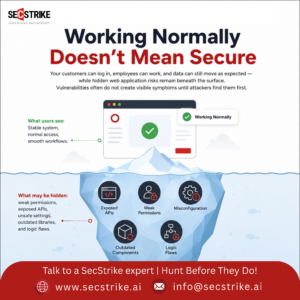
In web application security, many vulnerabilities do not create visible symptoms. The application may still function properly while hidden weaknesses exist in user permissions, API behaviour, cloud configuration, outdated components, authentication, session handling, or business logic.
That is why the OWASP Top 10 remains one of the most useful starting points for businesses that want to understand web application risk in a structured way.
What Is the OWASP Top 10?
The OWASP Top 10 is a web application security reference document created by OWASP, the Open Worldwide Application Security Project.
OWASP describes the Top 10 as a standard awareness document for developers and web application security. It represents a broad global consensus about the most critical security risks to web applications.
In simple terms, the OWASP Top 10 is a “risk map” for web applications. It helps IT, development, security, and business teams understand the types of weaknesses that can lead to serious security issues.
But the important point is this:
The OWASP Top 10 is not a security certificate. It is not a guarantee that your application is safe. And it is not a complete testing scope for every system.
OWASP helps you understand what to look for.
A pentest helps you understand what actually exists in your own system and what to fix first.
Why the OWASP Top 10 Still Matters in 2026
In 2026, web applications are no longer just supporting systems. They are digital front doors, customer service channels, payment flows, data processing points, and integration layers connected to many other systems.
The more your web app connects to APIs, cloud services, third-party plugins, payment gateways, and internal platforms, the wider your attack surface becomes.
The current released version, OWASP Top Ten 2025, includes updates based on the latest data and security trends. Its 10 categories include risks such as Broken Access Control, Security Misconfiguration, Software Supply Chain Failures, Injection, and Insecure Design.
For business leaders, these are not just technical issues. They can become business risks:
- Customer data may be accessed without permission
- Critical systems may be changed or abused
- APIs may expose sensitive data
- Misconfigurations may create unnecessary access points
- Weak logging may delay detection when something suspicious happens
A web application can look completely normal and still carry hidden risk.
The 10 Risk Categories in OWASP Top 10:2025
The OWASP Top 10:2025 includes the following categories:
- Broken Access Control — users can access data or functions outside their intended permissions
- Security Misconfiguration — applications, servers, cloud services, or security controls are configured insecurely
- Software Supply Chain Failures — risks from dependencies, packages, libraries, or software delivery processes
- Cryptographic Failures — sensitive data is not protected properly through suitable encryption or related controls
- Injection — unsafe input may allow attackers to run unintended commands or queries
- Insecure Design — security was not built into the system design from the beginning
- Authentication Failures — weaknesses in login, sessions, passwords, MFA, or identity controls
- Software or Data Integrity Failures — risks from untrusted code, updates, pipelines, or data integrity issues
- Security Logging and Alerting Failures — insufficient logging or alerting to detect suspicious activity
- Mishandling of Exceptional Conditions — poor handling of errors or unexpected conditions that may expose data or create security risk
This list is useful because it gives teams a strong starting point. But each category can contain many different weaknesses, different levels of severity, and different business impacts depending on the system.
Why “The System Works” Does Not Mean “The System Is Secure”
One common misunderstanding is that if an application is not down, it must be secure.
In reality, attackers do not always want to crash a system. Many prefer to stay quiet, explore permissions, test APIs, access data, steal tokens, or find a path into other systems.
For example:
A customer should only see their own information. But if access control is weak, changing an ID in a URL may reveal another customer’s data.
An employee should only access the functions relevant to their role. But if roles and permissions are unclear, a normal account may reach admin-level information.
An API may work properly in the normal user flow. But when called directly, it may fail to recheck permissions.
These issues may not make the system crash. But they can affect customer trust, compliance, business continuity, and brand reputation.
From OWASP List to Real Testing
Knowing the OWASP Top 10 is a good start. But the more important question is:
Do these risks exist in our actual application?
A team may know that Broken Access Control is important. But they still need to test whether users with different roles can access data or functions they should not.
A team may understand Security Misconfiguration. But they still need to verify whether their cloud settings, server headers, error messages, admin interfaces, and environments are secure.
A team may know that Software Supply Chain Failures are a growing concern. But they still need to check whether their libraries, packages, frameworks, and dependencies introduce real risk.
This is where Penetration Testing and Web Application Assessment help.
A penetration test is a controlled security test where experts examine the system from an attacker’s perspective. The goal is not simply to produce a long list of issues. The goal is to understand:
- Which weaknesses can actually be exploited
- What evidence proves the risk
- What business impact could follow
- What should be fixed first
- How remediation and retesting should be handled
SecStrike provides Penetration Testing, Vulnerability Assessment, Web Application Pentest, and API Pentest services, combining consultant-led expertise, platform-supported delivery, expert-reviewed findings, and practical remediation guidance.
A Practical Checklist for IT and Business Teams
Use these questions as a starting point:
- Do we have a complete list of our web applications, APIs, admin portals, and test environments?
- Are roles and permissions clearly defined?
- Have we tested Broken Access Control across different user roles?
- Are APIs checking authorization every time they are called?
- Are servers, cloud services, frameworks, and security headers configured securely?
- Are libraries, plugins, and dependencies updated and checked for known vulnerabilities?
- Have login, session handling, and MFA been tested from an attacker’s perspective?
- Do we have enough logging and alerting to detect suspicious behaviour?
- Do we have evidence from real testing, not only automated scan results?
- Do we have a clear remediation plan showing who fixes what, which issues come first, and how retesting will be done?
Conclusion: Do Not Let Attackers Be the First to Find Your Weaknesses
The OWASP Top 10 is a strong starting point for any business running web applications. But good security should not stop at reading a list or completing a checklist.
What organisations really need is tested clarity — a clear, evidence-based view of where the real risks are, which vulnerabilities matter most, and what the team should fix first.
Because in the real world, vulnerabilities do not always announce themselves. A system that looks normal may still contain weaknesses that attackers can see before you do.
Know your vulnerabilities first — before someone else finds them for you.
Start with a conversation with SecStrike. Our team can help scope your web application, API, or critical system and recommend the right testing approach based on your real business risk.
Talk to a SecStrike expert today.
Hunt Before They Do.
Sources
- OWASP Top Ten Web Application Security Risks — official project page. Used to verify that OWASP Top Ten 2025 is the current released version and that OWASP describes the Top 10 as a standard awareness document.
- OWASP Top 10:2025 — official release page. Used for the 2025 category list and wording that the version includes updates based on the latest data and security trends.
- SecStrike Thai Key Messaging Guide 2026 — used for campaign tone, CTA style, “Know your vulnerabilities first,” “Hunt Before They Do,” and Thai/English messaging direction.
- SECSTRIKE Company Profile 2026 — used for SecStrike service positioning around Penetration Testing, Vulnerability Assessment, Web Application Pentest, API Pentest, expert-reviewed findings, and remediation guidance.